Overview
Acoustics is the interdisciplinary science concerned with the generation, propagation, and reception of mechanical waves through gaseous, liquid, and solid media. At its core, the field addresses how pressure disturbances travel through a medium, how they interact with boundaries and structures, and how they are perceived and measured by both biological and electronic systems.
Research in this area spans a broad range of length and energy scales — from infrasound phenomena in geophysical systems to ultrasonic imaging in biomedical diagnostics. Central themes include room acoustics, noise control engineering, vibro-acoustic coupling, and the psychophysical modeling of auditory perception.
Learning Acoustics & Vibration
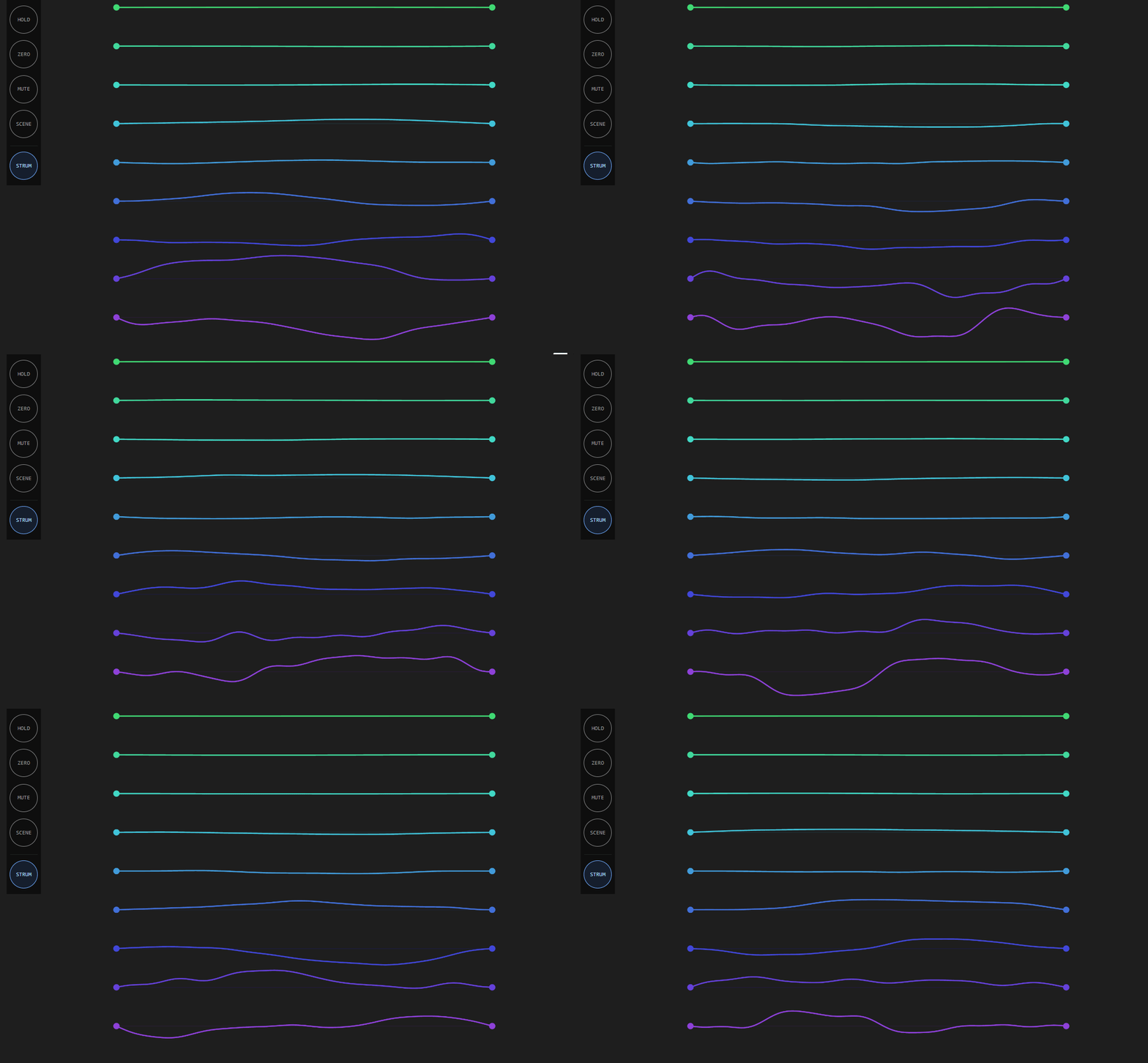
Nicolas Sowers: Vibration Playground
Browser-based interactive simulations of vibrating strings, membranes, and wave phenomena — explore and listen to mode shapes and resonance hands-on.
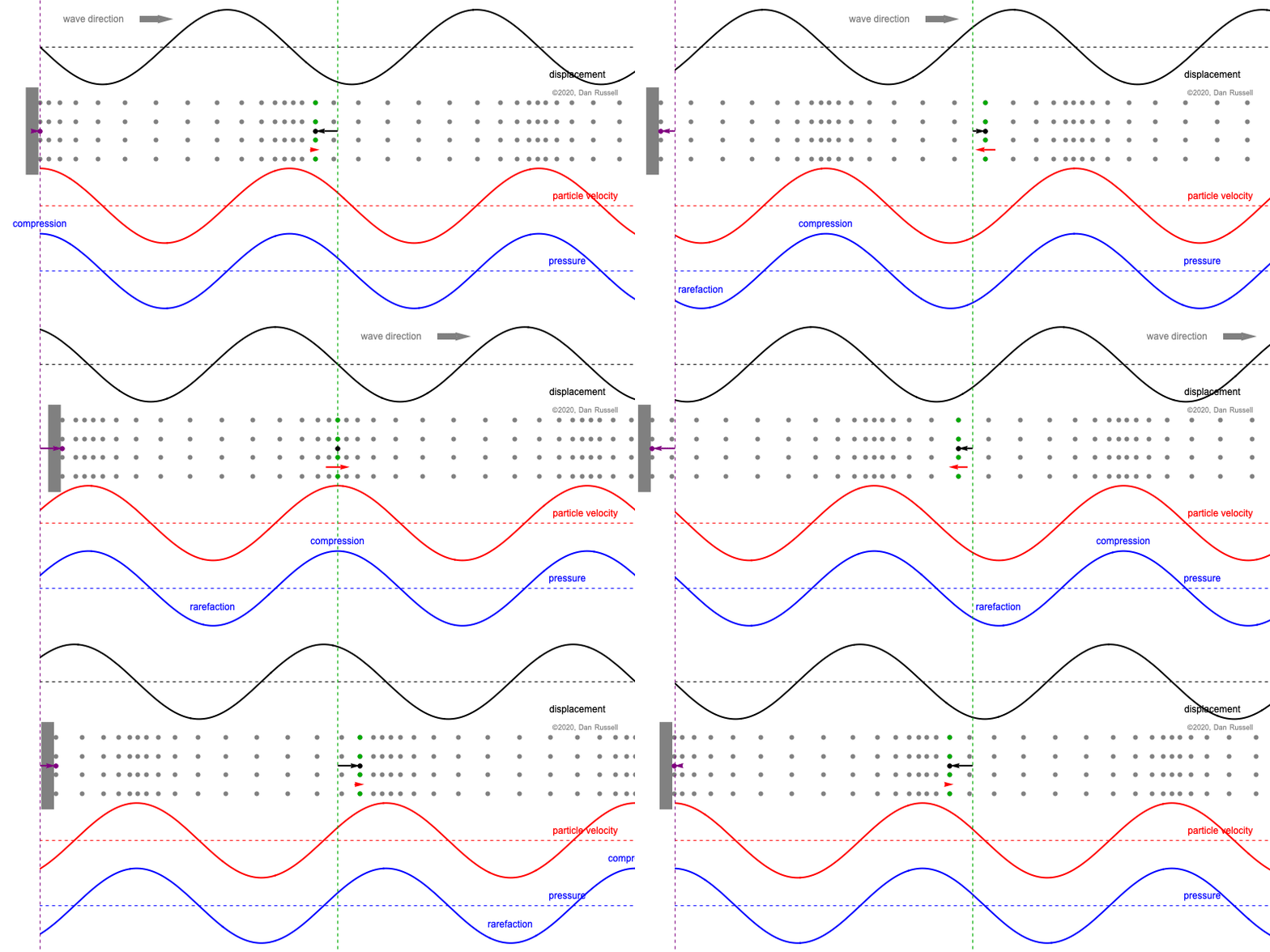
Dr. Daniel Russell: Acoustics Animations
Animated wave visualizations from Penn State's Dr. Daniel Russell — a widely used classroom resource covering wave propagation, interference, and more.
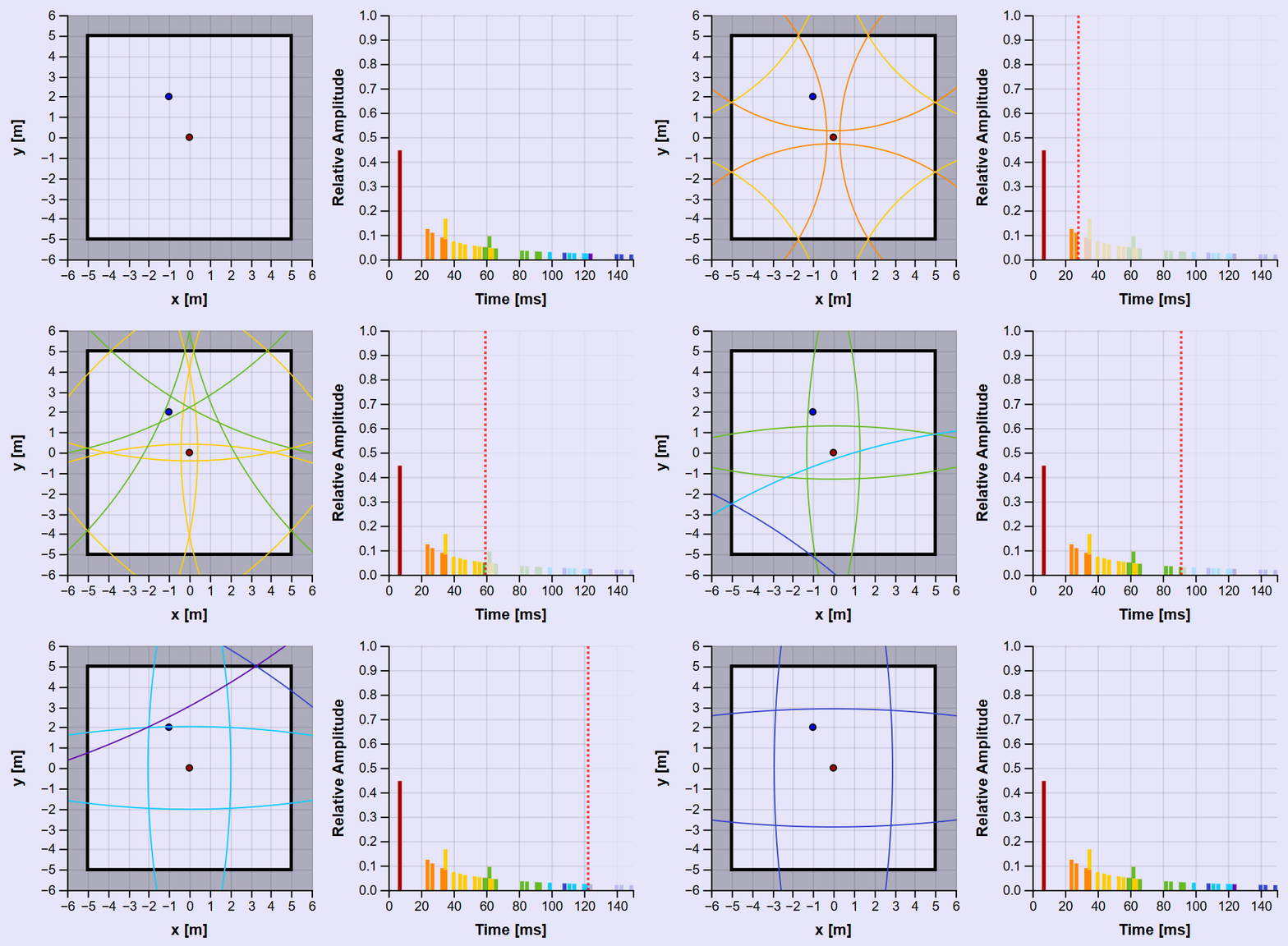
Noah J. Parker: Math of Sound
Educational acoustics resources and demonstrations from the Penn State Graduate Program in Acoustics.

Explore Sound
The Acoustical Society of America's public education site — articles, experiments, and explanations of sound science for all levels.

Acoustical Society of America
The premier professional society for acoustics — journals, meetings, technical committees, and membership resources for researchers and engineers in the field.
Interactive Content
The following area is reserved for embedded demonstrations, audio samples, or animated visualizations related to acoustic wave behavior.
Selected Topics
- Wave propagation — longitudinal and transverse modes in bounded and unbounded media
- Vibrating systems & sound-structure interaction — modal analysis, resonance, and coupled structural-acoustic response
- Room acoustics — reverberation time, absorption coefficients, modal analysis
- Noise control engineering — passive and active attenuation strategies, insertion loss measurement
- Signal analysis — FFT, octave-band filtering, sound pressure level metrics (Leq, Ldn)
- Electroacoustic equivalent circuits — electro-magneto-mechano-acoustic analogy networks, transducer modeling
- Transducer design & directivity — microphone and loudspeaker systems, arrays, beamforming
- 3-D / spatial audio — binaural rendering, head-related transfer functions, virtual listening environments
- Psychoacoustics — loudness, masking, the equal-loudness contour (ISO 226), auditory risk assessment
- Instrumentation & calibration — condenser microphones, DAQ chains, hemi-anechoic chamber measurements, shock tube characterization